
Kratom Effects on the Brain: What Hamilton Morris Found
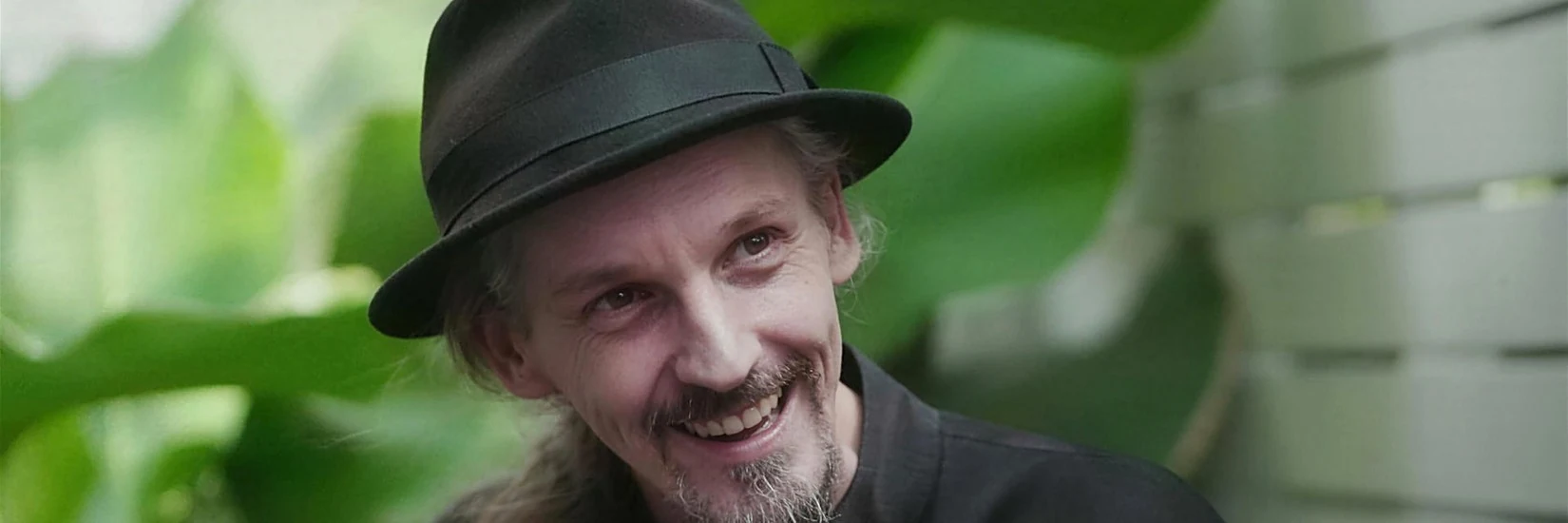
Kratom (Mitragyna speciosa) is a tropical tree in the coffee family whose leaves contain mitragynine and 7-hydroxymitragynine, two indole alkaloids that bind mu-opioid receptors without behaving quite like morphine. In his 43-minute VICE film, ethnobotanist Hamilton Morris traced kratom from a Brooklyn bar to a Thai rainforest — and the single most citable finding was Dr. Kumaret's EEG study showing kratom does not activate the nucleus accumbens, the brain's reward centre, the way morphine does [1][2].
Video: “Testing How Kratom Affects the Brain,” hosted by Hamilton Morris for VICE / Blueprint. Embedded here for reference and commentary.
What Is Kratom, and What Did the VICE Experiment Set Out to Test?
Kratom is a Southeast Asian tree in the Rubiaceae family — a botanical cousin of the coffee plant — whose glossy, ovate-lanceolate leaves have been chewed for centuries as a stimulant and pain reliever [1][4]. Hamilton Morris set out to answer a simple question: is this plant really the public-health threat US agencies claimed in 2016?
The film moves between three worlds. In Brooklyn, kratom is sold openly in kava bars as an extract or powder. In Thai villages, farmers hide backyard trees because the plant was criminalised in 1943. In a Thai neuroscience lab, Dr. Kumaret has spent years wiring the brains of mice to answer the addiction question directly [1].
Morris's thesis, developed across 43 minutes, is that kratom is "an almost entirely benign, vaguely bitter, mildly psychoactive Thai plant" whose reputation has been shaped less by pharmacology than by politics [1].
How Does Kratom Affect the Brain?
Kratom's principal alkaloids bind mu-opioid receptors, but as partial agonists that recruit the beta-arrestin signalling pathway far less than morphine or fentanyl — the mechanistic reason respiratory depression risk appears much lower [2][3]. That is the headline pharmacology.
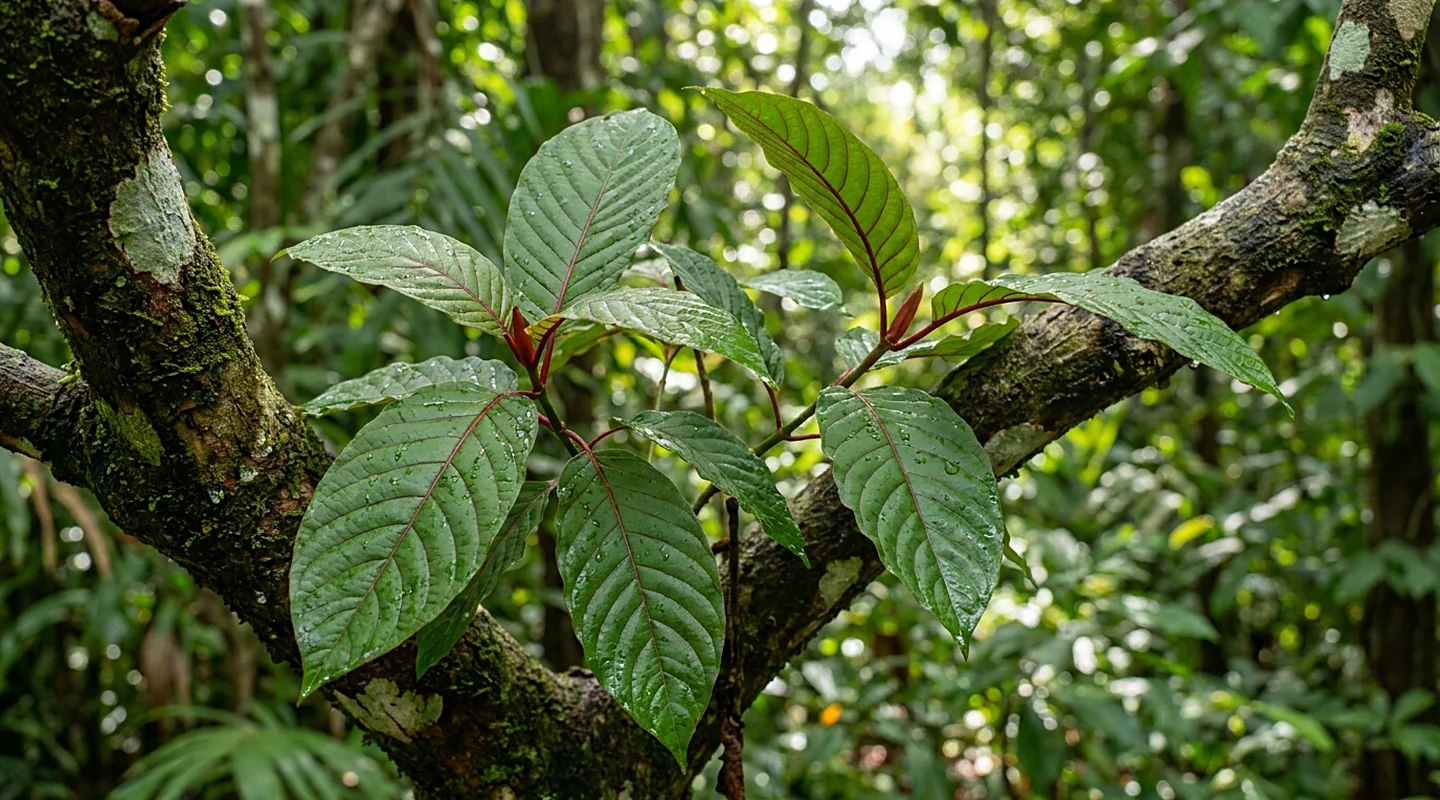
Mitragynine typically makes up 60–66% of total alkaloid content in the leaf, with 7-hydroxymitragynine present in trace amounts but roughly an order of magnitude more potent at the mu-receptor and considered an active metabolite of mitragynine [2][3]. The leaves contain more than 40 structurally related alkaloids in total [3].
Dr. Kumaret explains in the film that mitragynine's three-dimensional structure resembles morphine closely enough to dock at the opioid receptor, but not at every subtype — which is why it is less potent than morphine and produces a qualitatively different experience [1].
"It should not be classified as an opiate, but nobody listens to me. They just listen to what they want to believe. Nobody listens to the scientist." — Dr. Kumaret [1]
Why Doesn't Kratom Light Up the Brain's Reward Centre?
Because in Dr. Kumaret's rodent EEG studies, mitragynine produced no measurable electrical change in the nucleus accumbens — the mesolimbic reward hub that lights up under morphine — and no change in locomotor activity either [1]. This is the film's scientific centrepiece.
The nucleus accumbens is where the dopaminergic signature of addiction is written. Morphine reliably drives activity there; kratom, in the same experimental paradigm at timestamp 25:28, did not [1]. Kumaret's interpretation is that kratom's addiction liability is vastly reduced compared with classical opioids, though not necessarily zero — heavy daily users still report physical dependence and withdrawal.
The biased-agonism story explains why. Beta-arrestin recruitment is linked both to the respiratory-depression pathway and to some reinforcement effects; alkaloids that lean toward G-protein signalling and away from beta-arrestin tend to show a wider therapeutic window in preclinical work [3].
Stimulant or Sedative? Kratom's Biphasic Dose Response
Kratom is biphasic: at low doses (roughly 2–3 grams of leaf) it acts as a stimulant; at high doses it becomes sedative and analgesic [1]. This is why Thai rubber tappers chewed a few leaves for energy while patients seeking pain relief used much larger amounts.
Dr. Kumaret told Morris that chewing 2–3 fresh leaves produces a clear stimulant, coffee-like lift, while consuming around 200 leaves per day tips into sedation and analgesia [1]. Brooklyn bar staff described the same curve in powder terms — start at 2–3 grams to see how the body reacts, and expect nausea as the main ceiling if the dose is too high [1].
| Parameter | Kratom (mitragynine / 7-OH) | Morphine / synthetic opioids |
|---|---|---|
| Receptor target | Mu-opioid partial agonist | Mu-opioid full agonist |
| Beta-arrestin recruitment | Low (biased toward G-protein) | High |
| Respiratory depression risk | Significantly reduced | High; leading cause of opioid death |
| Nucleus accumbens activation (EEG, rodent) | Not observed [1] | Clear activation [1] |
| Dose-effect curve | Biphasic: stimulant 2–3 g, sedative at high dose | Monophasic: sedative/analgesic across range |
| Overdose ceiling | Nausea and vomiting typically self-limit intake [1] | No behavioural ceiling before respiratory arrest |
| Source | Morris (VICE) [1]; Kruegel & Grundmann [2]; Prozialeck et al. [3] | Same reviews |
Why Was Kratom Banned in Thailand?
Kratom was criminalised in Thailand in 1943, not for public-health reasons but to protect state opium revenue, which then supplied between 8% and 21% of the national budget [1][5]. Opium users were switching to kratom to wean themselves off dependence, and every switcher was lost tax income.

Pascal Tanguay, a drug-policy reformer interviewed in the film, lays out the arithmetic plainly. The Thai government of the 1940s was, in effect, an opium dealer, and kratom was the free herbal competitor undercutting the market [1][5].
"Between 8% and 21% of national revenue was financed through opium sales. Every user who switched to kratom was a large revenue loss." — Pascal Tanguay [1]
The downstream harm fell on rural rubber-plantation workers and manual labourers who chewed leaves for stamina in tropical heat. Morris and Tanguay describe the crackdown as "a war on the poor," with kratom trees felled across the country and arrests concentrated in the deep south, where the plant use was politically conflated with the Muslim insurgency despite scant overlap [1]. In 2021 Thailand reversed course and decriminalised the plant, but tree populations and traditional knowledge had already been badly damaged [5].
The "4x100" Myth: What the Media Got Wrong
In the early 2000s Thai tabloids reported a teenage kratom cocktail called "4x100" allegedly spiked with mosquito coils, crushed fluorescent-bulb powder, or human remains — sensational claims that Morris found no evidence for on the ground [1].
He filmed local youths preparing the drink. Stripped of the tabloid additives, 4x100 is essentially a kratom-leaf iced tea with a splash of cough syrup — an unremarkable teenage buzz, and demonstrably not a corpse smoothie [1].
Morris's conclusion is characteristically dry: the real harm around 4x100 is not the recipe but the crackdown that pushed a mild plant preparation into the same shadow economy as harder drugs [1].
Kratom in the US: A Rare Win Against the DEA
Kratom has grown into a US market of an estimated 3–5 million users generating around $250 million in annual revenue, with roughly 80 tonnes imported daily from Indonesia — the distributor in Morris's film puts that at about 16 million doses per day [1][6]. It is sold as powder and extract in kava bars, head shops and online.

In August 2016 the DEA announced its intent to place mitragynine and 7-hydroxymitragynine on emergency Schedule I. Advocates collected more than 140,000 signatures, rallied outside the White House, and mobilised pain patients and researchers. In October 2016 the DEA withdrew the notice — an almost unprecedented reversal for the agency [6].
Morris interviews a former dancer with degenerative disc disease and lupus who had been escalating her prescription opioid pills from 6 to 8 to 10 per day. She now uses roughly 5 grams of kratom in the morning and 3 grams at night as her primary analgesic, and describes the switch as life-changing [1]. Her testimony is reportage, not a prescription.
Is Kratom Safe? What the Science Actually Says
The honest short answer: kratom's risk profile is meaningfully lower than that of classical opioids on the two measures that kill people — respiratory depression and reward-driven compulsive use — but it is not risk-free [2][3][7]. Balanced framing matters.
What the pharmacology supports: reduced respiratory-depression risk from biased agonism [3]; a self-limiting nausea ceiling that makes classical overdose extremely rare [1]; and no observed activation of the nucleus accumbens in Kumaret's rodent EEG work [1]. What deserves caution: heavy daily dosing (multiple times a day, for months) can produce physical dependence and a mild opioid-style withdrawal [7]; unregulated extracts vary enormously in potency; drug interactions are real, especially with CYP-metabolised medicines and other sedatives; and kratom is not appropriate during pregnancy, for anyone under 18, or alongside prescription opioids, benzodiazepines or MAOIs.
Vein colour — red, green, white — is a traditional shorthand for alkaloid ratios and drying method, and correlates loosely with reported effect (red = more sedating, white = more stimulating), though the underlying chemistry is a spectrum, not three discrete products [3].
From our counter: If you are new to the leaf, the pattern that keeps coming up in the film and the pharmacology reviews is the same: start with 2 grams of plain leaf powder on an empty-ish stomach, drink plenty of water, and wait a full 45 minutes before considering more. Nausea is the body's first honest signal that a dose is too high. Quality varies wildly between suppliers — freshness, alkaloid content and absence of adulterants matter far more than exotic strain marketing.
References
- Morris, H. (host) (2016). Testing How Kratom Affects the Brain. VICE / Blueprint, 43-minute documentary.
- Kruegel, A. C. & Grundmann, O. (2018). The medicinal chemistry and neuropharmacology of kratom. Neuropharmacology, 134, 108–120.
- Prozialeck, W. C., Avery, B. A., Boyer, E. W., et al. (2020). Kratom policy: The challenge of balancing therapeutic potential with public safety. International Journal of Drug Policy, 70, 70–77.
- Raffa, R. B. (ed.) (2015). Kratom and Other Mitragynines: The Chemistry and Pharmacology of Opioids from a Non-Opium Source. CRC Press.
- Tanguay, P. (2011). Kratom in Thailand: Decriminalisation and community control? Transnational Institute / IDPC Series on Legislative Reform of Drug Policies, No. 13.
- US Drug Enforcement Administration (2016). Withdrawal of Notice of Intent to Temporarily Place Mitragynine and 7-Hydroxymitragynine into Schedule I. Federal Register, 81 FR 70652.
- Henningfield, J. E., Fant, R. V. & Wang, D. W. (2018). The abuse potential of kratom according to the US eight-factor scheduling analysis. Psychopharmacology, 235, 573–589.
- Singh, D., Narayanan, S. & Vicknasingam, B. (2016). Traditional and non-traditional uses of Mitragynine (Kratom): A survey of the literature. Brain Research Bulletin, 126, 41–46.
Last reviewed: July 2026
Vanliga frågor
8 frågorIs kratom an opioid?
Can you overdose on kratom?
Is kratom addictive?
How long do kratom effects last?
Does kratom show up on a drug test?
What is the difference between red, green and white kratom?
Is kratom safe for daily use?
How much kratom should a beginner take?
Om denna artikel


Adam Parsons is an external cannabis and psychedelics writer and editor who contributes to Azarius's wiki as both author and reviewer. On the writing side, he authors Azarius's kratom and kanna clusters, drawing on exten
Den här bloggartikeln har tagits fram med hjälp av AI och granskats av Adam Parsons, External contributor. Redaktionellt ansvar: Joshua Askew.
Senast granskad 27 juli 2026
Relaterade artiklar
Kratom och hjärnan: vad Hamilton Morris visade
Vad händer i hjärnan av kratom? Hamilton Morris VICE-dokumentär, Dr Kumarets EEG-studier och den aktuella farmakologin sammanfattat.
Psilocybin och hjärnan — så funkar det neurologiskt
Psilocybin och hjärnan: så binder psilocin till serotonin 2A-receptorn, vad fMRI visar och vad kliniska studier säger. Skriven för vuxna 18+.
Cannabis förbränningskemi: vad händer vid 900°C
Cannabis förbränningskemi förklarad: hur pyrolys vid 900°C bildar formaldehyd, bensen och PAH — och varför förångning och edibles ser helt annorlunda…